Course Review: Sea Trail Maples
December 15, 2011 by gary
Filed under Recreation and Sports
The Maples Course at Sea Trail Resort & Golf Links offers a few touches that give it a unique look on the Grand Strand.
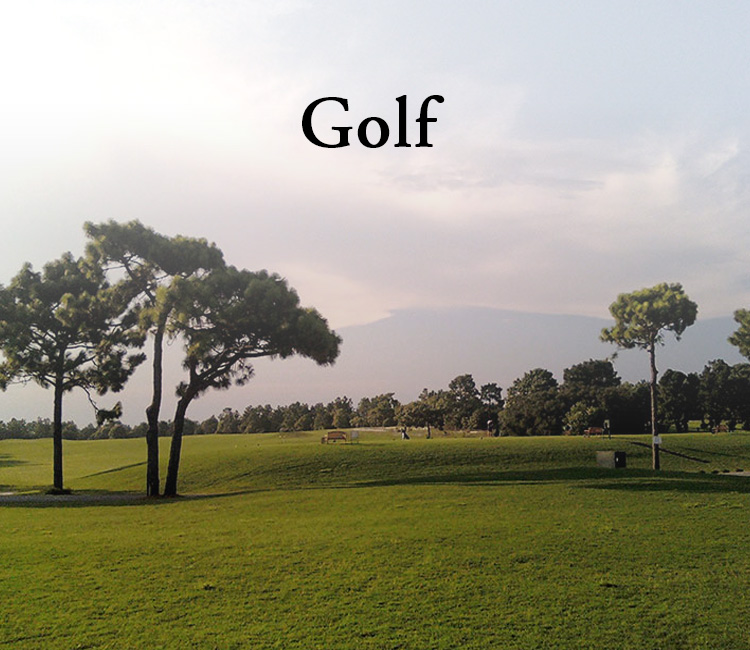
Several moss-draped oaks and pine trees grow in waste bunkers that line a few holes; brick and stone walkways lead the way to tee boxes through waste bunkers; an open cemetery is passed en route to the second tee box; and despite meandering through a heavily developed residential community, the course also has a handful of holes that run along the Calabash Creek.
“I’ve seen waste bunkers with pampas grass growing out of them, but never trees,” said Frances Pritchard of Conway, a member of a foursome that reviewed and rated the course in early December. “It’s a nice addition.”
The Dan Maples layout is not overly demanding in length, measuring 6,797 from the back blue tees and 6,332 from the white. And you shouldn’t lose many balls. Tree-lined fairways rather than hazards account for the course’s biggest challenge.
In addition to Frances, a hostess at Papa’s restaurant who carries a handicap of 28, the foursome included me, Pete Veum, a retired salesman from Myrtle Beach who plays to a 13, and Ed Wydro, another retiree from Little River who plays to an 18. Pete played the back tees, Ed and I the white and Frances the 5,090-yard red. The course also features 6,035-yard gold tees.
“It’s a fair challenge from the white tees,” Ed said. “Under normal circumstances, the average player would have a tough time but a good time. The course makes you think a little bit.”
“Which is a real problem for us,” Pete added.
Over the summer and fall, the Maples Course closed for $500,000 in renovations, and changed its greens from Bermuda to an A1/A4 blended bent grass. Due to the increased speed associated with bent, several green complexes were redesigned to reduce their undulation, though there are still significant mounds, ridges and slopes on most.
“I thought they putted well for only being a month or two old,” said Pete, who has played the course three times. “In the summer, they’ll be very fast. They’re much better than they were before.”
Sea Trail also refurbished bunkers with a light, white sand, and managed to improve air circulation throughout the course without significantly altering the course’s tight, tree-lined characteristic.
“You have to be accurate on the second shots on the par-4s and the third shots on the par-5s,” Pete said. “They all narrow down as you go to the green.”
There are approximately 50 bunkers on the course, but many aren’t in traditional landing areas and greens are generally open in front with no more than two bunkers protecting any of them. The course’s rough is not very penal.
“The rough is not too deep, but it’s high enough to let you know it’s there,” Ed said. “That’s the way it should be for the average player. It’s there, but you can play out of it.”
Because it’s a residential course, out of bounds lurks close to the fairways of many holes. But so do friendly neighbors. A bowl of candy was left at the base of a tree behind a home adjacent to the cart path off the 15th women’s tee box, and was accompanied by a sign wishing everyone a merry Christmas. Pete and Ed abstained, possibly fearing a terrorist scheme, but Frances and I each grabbed a piece. “They’re so skeptical,” Frances said. “Some people are just nice.”
The par-3s are all between 150 and 172 yards from the white tees and 170-198 from the blue tees, and holes 5, 11 and 17 are straightforward with an open entrance to the greens. “The par-3s looked a lot alike,” Pete said.
The third hole is the most distinctive of the par-3s. It features split tee boxes, with the red and gold to the left and blue and white to the right, where a pond to the right of the green comes more into play and a short but wide tree that is growing out of a waste bunker in front of the green must be carried. “It’s a different look,” Ed said.
The course gets much of its yardage from the par-5s, especially from the back tees, where they start at 545 yards and stretch to 575. The one reprieve from the white tees is the 490-yard 12th. Otherwise, they measure between 525 and 553 yards.
The fourth hole is a straightforward par-5, while the sixth is designed for three shots. It features a gradual bend to the right that makes it difficult to get a good angle to the green on the second shot, and a small pond 20 yards from the green on the left side to further deter bold attempts.
The 12th hole has the creek to the left but is open to approach shots and can be reached after a long drive, and the 575-yard 15th has a waste bunker running all the way up the left side to the 150 marker, and another small waste bunker with a dead tree to the front-right of the green.
Though the majority of the doglegs turn to the left, the par-4s offer a variety of yardages and looks. “The course is laid out really nice,” Frances said. “It’s not a humdrum course. Each hole is a little different.”
The diversity of the par-4s is demonstrated in the front nine’s closing holes.
The seventh hole measures 410 from the back tees and 375 from the white. A drive of between 200 and 225 is required to get past the left tree line on the sharp dogleg-left, with an approach shot from 130 yards or less to a green that slopes to the front and back due to a middle ridge.
The dogleg-left eighth is 410 from the blue and 380 from the white, and requires a drive over water through a chute of trees, then approach to a green protected by a pair of bunkers to its right. More of the fairway’s left side is open to drives from the white tees, considerably shortening the hole.
The ninth hole is perhaps the toughest on the course because of its length of 455, 445, 420 and 360 from the four tee boxes, and one of the smaller greens on the course with a large ridge separating its right front and back portions.
The course’s first two holes are short par-4s with Calabash Creek running along the right side of each, and the closing hole is a very birdieable par-4, measuring 410 from the blue, 330 from the white and just 250 from the red, with housing on the left.
By Alan Blondin
———————————————————————-
Sea Trail Dan Maples Signature Course - Twisted ancient oaks and tall Carolina pines define each hole on the beautiful par 72 course, still regarded as one of Maples finest. This one-of-a-kind course has newly renovated A1/A4 blended Bent grass greens and boasts five holes that wind along the scenic Calabash Creek, home to nesting ospreys and other native wildlife. The course is also peppered with numerous waste bunkers, one of which extends the full length of a fairway. Contact us for additional information or call 800-624-6601 or 910-287-1157. http://www.seatrail.com
———————————————————————-
Sea Trail Willard Byrd Signature Course -
Opened in the Fall of 1990, each hole of the Willard Byrd Golf Course at Sea Trail Resort & Golf Links, Sunset Beach, NC is memorable for both beauty and exacting play.
Built around several man-made lakes, each ranging from 14-20 acres, every hole of this par-72 signature course requires a distinctly difference approach. Contact us for additional information or call 800-624-6601 or 910-287-1157. http://www.seatrail.com
———————————————————————-
Sea Trail Rees Jones Signature Course – The Rees Jones Golf Course at Sea Trail Resort & Golf Links, Sunset Beach, NC, opened in the Spring of 1990 and has become a perennial favorite of visitors and locals alike. Players of all skill levels will enjoy an extraordinary golf experience on this straightforward golf course with typical Jones bounding. Wide fairways and large mounds are surrounded by water, with water coming into play on 11 holes of the Par 72 championship course. In addition to water hazards, the many pot and large expanse bunkers make for a delightfully challenging game of golf. Contact us for additional information or call 800-624-6601 or 910-287-1157. http://www.seatrail.com
Course Review: Sea Trail’s Byrd
December 15, 2011 by gary
Filed under Recreation and Sports
Sea Trail’s Willard Byrd course: an underrated challenge!
The Rees Jones course at Sea Trail is the resort’s most popular course, mainly because golfers want the opportunity to play a tract designed by one of the nation’s most acclaimed architects. Yet, one of its mates, Sea Trail’s Willard Byrd course, is an underrated challenge that is just as popular with many of the people that have played them both.
“The Byrd course since they put the new greens in is great,” said New York resident Tom Capowski, a 5 handicap. “I prefer this actually even over the Jones. It’s very playable for most of the people. I know guys that play here that are 30 handicaps or 15s. It’s playable for everybody. It’s challenging enough. I enjoy it.”
Both the Byrd and Jones courses opened in 1990, and each of them have their own personality and have developed their own following.
“The public all wants to play Rees Jones,” said Tom Plankers, the president of golf at Sea Trail. “The Willard Byrd is more renown for being one of the better Southern courses he’s done. He’s done quite a few in the South, but this is probably one of his better golf courses.”
Sea Trail Resort’s Byrd Course is a prime example of why so many courses on the Grand Strand are replacing bentgrass greens with new ultradwarf Bermudagrasses.
The pine tree-lined Willard Byrd layout that opened in 1990 has been revitalized by the changing of the greens last year from bent to Champion Bermuda.
“The greens are great. They are huge, they don’t have any blemishes and are really true,” said Josh Unger of Myrtle Beach, a student at the Golf Academy of America who took part in a review of the course in late March.
“Any time you can get a green that’s big and relatively flat that is ideal. These greens are big and they have some undulation in them but not too much, and they’ll hold shots and aren’t too hard.”
Joining me and Josh, who carries a 10.4 handicap, in the review foursome were John Hasenstab of Murrells Inlet, a retired educator with a 17 handicap, and Grace Caravello of Conway, a retired Verizon systems analyst with a 24 handicap.
“This course had a tremendous variety of holes,” John said. “There are many very nice holes with scenic aesthetics.”
The course’s yardage of 6,740 doesn’t require a driver off every tee and includes a number of doglegs both right and left. “A variety of clubs can be used off the tee and there’s a high amount of risk-reward,” Josh said.
There is some water on the layout but most of the difficulty stems from bunkers. Both waste and traditional bunkers pinch fairways, and 15 of the 18 greens are protected by multiple bunkers. “The course was very fair with good shots and not overly punitive for bad ones,” John said.
The course’s aesthetics include stone walkways to delineate parking areas at tees and greens, dead trees in some waste bunker areas, a plethora of wildlife including alligators and a variety of birds – there’s an osprey nest on the 18th fairway near the green – and attractive housing, including Charleston-style homes on some holes.
“The course was in great condition,” Josh said. “The manicuring on this course is really nice. They definitely take time and do the work to make it nice.”
Women have a significant advantage on many holes with a total yardage of 4,621 yards. “The par-3s were easy for women and some of the par-4s were short enough to make it in regulation,” Grace said. “The par-5s were short also.”
Likes
The driving range has target greens and flags with measured yardages, and there is a chipping green with a bunker.
John enjoyed the tee-time separation of 10 minutes, compared to eight minutes at many clubs, and the policy to start every group on the first tee. “What a pleasant experience it is,” John said. “We didn’t push the group in front of us and we weren’t pushed, and that must be attributed to the 10-minute tee times.”
Grace thought the staff was friendly and helpful and enjoyed the rolling terrain in and around many fairways. “Fairways were hilly and fun to play,” she said.
With combined green and cart fees between $40 and $55 year round, “it’s a great value,” John said.
Josh appreciated the tree-lined layout and detailed yardage book. “It’s very detailed and helped a lot having not played the course before,” Josh said.
Dislikes
There are small hole depictions on the scorecard and yardage books are available for $3, but there weren’t hole depictions on tee boxes. “If we didn’t have the yardage book we would have been lost because there were no hole descriptions at the tee boxes like a lot of courses have, and there are some things you can’t see on the tee box,” Grace said.
The sand was good when abundant in bunkers, but it was inconsistent and thin in spots and had sparse grass growing through some areas. “The bunkers were unkept and irregular in condition,” John said.
Josh thought out-of-bounds stakes created by housing were too close to some fairways, and Grace didn’t believe there was enough selection of women’s clothing in the pro shop.
Par-3s
Par-3 distances are very manageable at between 174 and 202 yards from the tips. The 174-yard second hole measures 167 from the white tee and requires a carry over water to a green that is angled to the back right, slopes to the front and left, and is surrounded by four bunkers, including an expansive bunker to its left.
The 190-yard seventh is 167 from the white and has a drive over a waste bunker decorated with a pair of small dead trees. A mildly rolling green is situated between five bunkers.
The 186-yard 12th measures 163 from the white and requires a drive over a water hazard that extends past the left side of a wide green that contains a couple rolling areas. A bunker covers the entire front of the green and there are smaller bunkers back and back left. “It’s a great par-3 over water with wind factoring in,” John said.
Several bunkers are snuggled around the green of the 202-yard 16th hole, which is 155 from the white.
Par-4s
None of the par-4s were overwhelmingly long, measuring between 368 and 412 yards. “There’s a good variety of par-4s,” John said. “Some were easily reachable in two, some were tough.”
The 387-yard first hole doesn’t require a driver and is somewhat benign, though it has water far left. The 412-yard fifth is straightforward with five deep bunkers protecting the fairway and one protecting the front left of the green.
The 396-yard sixth has a fairly narrow landing area caused by bunkers pinching both sides of the fairway, with the left bunker prominent off the tee. The eighth, 10th and 11th holes are either sharp or slight dogleg rights, the 15th is a sharp dogleg left, and the 404-yard slight dogleg-left 14th has a very narrow landing area for a driver, with water coming into the fairway from the left that is blind from the tee and bunkers on the right.
“They have a nice mix of dogleg lefts and dogleg rights,” Josh said. “There’s a lot of risk-reward from the back tees on the hard dogleg par-4s. You can hit to the dogleg with a hybrid or take on the dogleg with a driver.”
Par-5s
Three of the par-5s measure between 515 and 542 yards, while the final par-5 offers birdie and eagle possibilities. Only one par-5 is more than 495 yards from the white tees. “All the par-5s were fair and scoreable,” John said.
The 525-yard third hole measures 468 from the white tee and features a drive over water to a fairway on the left that must be placed between a pair of fairway bunkers at the turn of a sharp dogleg right. The fairway is a narrow corridor through pines and is rolling with mild mounding on both sides. The green has a mild plateau back right and is protected front and left by one bunker and right by another. “It’s a wonderful hole that requires a good drive and solid approach,” John said.
The 542-yard ninth is 517 from the white and turns slightly left with five bunkers to maneuver beginning deep in the tee shot landing area. The 528-yard 13th is 493 from the white and has bunkers both left and right in the fairway off the tee, and a green-fronting water hazard cutting across the fairway beginning 70 yards from a green that bends around a back left bunker and features a mild ridge through the middle.
The short 469-yard 18th measures 442 from the white and is intimidating in the yardage book with water abound, but the landing area is generous. “Once you get off the tee you’re good to go toward the green,” Josh said.
“All the par-5s were reachable in two good shots, though No. 13 may require a layup short of the water with 80 yards in after that,” Josh said. “They had tight landing areas off the tee with a driver but then the fairways opened up into large bunker-surrounded greens.”
Favorite holes
Josh’s favorite hole was the par-4 17th, a 382-yard hole turning slightly right with an elevated tee, water down the left side and a green well-protected by four bunkers. “A good drive will get you around 130 to 140 yards into the green, and the hole is aesthetically pleasing from the tee,” he said.
John enjoyed the par-4 14th, measuring 380 yards from the white tee, because “it required a center drive and punished you left or right.” He also liked the par-5 13th and third holes. “The third, with a drive across water at an angle into rolling hills to a dogleg right, was a great hole,” John said.
Grace liked the par-3 second hole, which measured 106 yards from the red tee and required a short shot over water to the green.
Least favorite holes
Josh’s least favorite hole was the 407-yard par-4 fourth, a sharp dogleg left turning around a waste bunker and tree line. A tree extending beyond the waste bunker on the left side of the fairway forces players to hit a well-placed tee shot of 240 to 270 yards to have a clear shot at the green, and OB lurks on the right. “You really only have about 30 yards to place your ball in the fairway off the tee and have a shot at the green,” Josh said.
John’s least favorite hole was the par-3 16th. “It was the least aesthetically pleasing hole on the course,” he said.
Grace’s least favorite hole was the par-5 13th, which measured 382 yards from the red tee and required about a 60-yard carry over water to reach the green. “I had to go over the water on the fourth shot and couldn’t make it over on the third shot, and I hate having to lay up like that and lose a shot.”
To view Blondin’s blog, Green Reading, or Q&A Forum, Ask Al, go to TheSunNews.com.
Sea Trail Willard Byrd Signature Course -
Opened in the Fall of 1990, each hole of the Willard Byrd Golf Course at Sea Trail Resort & Golf Links, Sunset Beach, NC is memorable for both beauty and exacting play.
Built around several man-made lakes, each ranging from 14-20 acres, every hole of this par-72 signature course requires a distinctly difference approach. Contact us for additional information or call 800-624-6601 or 910-287-1157. http://www.seatrail.com
———————————————————————-
Sea Trail Dan Maples Signature Course - Twisted ancient oaks and tall Carolina pines define each hole on the beautiful par 72 course, still regarded as one of Maples finest. This one-of-a-kind course has newly renovated A1/A4 blended Bent grass greens and boasts five holes that wind along the scenic Calabash Creek, home to nesting ospreys and other native wildlife. The course is also peppered with numerous waste bunkers, one of which extends the full length of a fairway. Contact us for additional information or call 800-624-6601 or 910-287-1157. http://www.seatrail.com
———————————————————————-
Sea Trail Rees Jones Signature Course – The Rees Jones Golf Course at Sea Trail Resort & Golf Links, Sunset Beach, NC, opened in the Spring of 1990 and has become a perennial favorite of visitors and locals alike. Players of all skill levels will enjoy an extraordinary golf experience on this straightforward golf course with typical Jones bounding. Wide fairways and large mounds are surrounded by water, with water coming into play on 11 holes of the Par 72 championship course. In addition to water hazards, the many pot and large expanse bunkers make for a delightfully challenging game of golf. Contact us for additional information or call 800-624-6601 or 910-287-1157. http://www.seatrail.com
$30 Golf: Canned Food Drive!
December 14, 2011 by gary
Filed under Recreation and Sports
Help those in need with a great rate on golf for yourself at Sea Trail!
Sea Trail is helping those in need during the holiday season for 2011 with its Canned Food Drive, Beginning December 1st 2011 you can get one round of golf on any of Sea Trail’s three signature courses of Distinction for just $30 per person with a donation of three cans of food.
Sea Trail collects these donations and delivers them to the Brunswick Family Assistance program to provide food for those less fortunate in the area. Ca;; 910.287.1122 or visit the Sea Trail Golf Shops for more details and tee times.
Miller Pope’s Vintage/Retro Art
December 6, 2011 by gary
Filed under Cool Stuff
Local Artist and author Miller Pope is offering high quality Giclée prints of his original artwork available for sale on Islands-Art.com!
While priced as low as $8.00, all prints are titled digitally and reproduced as high quality Giclées.
A light gray mat is also printed around the white area. All prints fit standard frame sizes found everywhere. Pricing is by frame size.
To view all of Miller’s prints and/or purchase these prints click here!
The first series Miller has released were nature and beach scenes.
Other series now released include prints of his illustrations from his four pirate books and a selection of his retro/vintage ar
t from the 19950s and 1960s.
Miller was recently the subject of a feature article in the January issue of Our State Magazine.
Miller Pope was born in South Carolina but spent most of his career during the “golden age of illustration” in the New York advertising and publishing arenas, after getting his start on the Marine Corps’ legendary Leatherneck magazine.
Miller studied figure drawing at the Corcoran School of Art in Washington, D.C., at the Art Students League in New York City.
His works have appeared on novel covers and in major magazines. He was elected to the Society of Illustrators in 1957.

With his wife, Helen, he moved south in the 1970s and worked to develop The Winds Resort Beach Club and Sea Trail Plantation on the Southeastern North Carolina coast.
To view all of Miller Pope’s prints and/or purchase these prints click here!
Book On Area History
December 5, 2011 by gary
Filed under Cool Stuff
Tales of the Silver Coast – A Secret History of the Wilmington and Brunswick County Area – From the earliest days of European exploration to the golf courses and beach resorts in this fascinating and fast-growing region, Brunswick County has attracted settlers, invaders, and visitors of all descriptions.
In these pages you’ll read about Steve Bonnet, the “Gentleman Pirate,” who hid his ships in Brunswick’s moss-draped creeks but unfortunately underestimated the ebbing tide; Coast Guard mounted on horse-back patrolling Ocean Isle’s beaches hunting for spies landed by German submarines; “Mrs. Calabash,” who’s said to have lent her name to the famous sign-off for Jimmy Durante’s classic radio shows; and Topsy the Elephant, who swam for the Brunswick riverbank after breaking loose from circus handlers in the 1920s.
Follow the struggles and victories that shaped Brunswick County, from the first contact of Europeans with native Americans, to successive administrations of the Lords Proprietors, the royal governors, the British crown, and the leaders of a new nation—many at whom hailed from this small but influential corner of North Carolina. Discover Brunswick’s rich Civil War history, scenic roadways and waterways and current-day towns and townships.
Tales of the Silver Coast, recounts the tales of privateers and plantation owners, politicians and Prohibition rum-runners and the many colorful people and diverse places of southeastern North Carolina.
The Nine Irony By Tom Rieber
December 5, 2011 by gary
Filed under Cool Stuff
The Nine Irony, the latest in the Nick Thomas Mysteries series by Local Author Tom Rieber is now available online.
Nick Thomas is a little bit of all of us; believable, lovable, tough when need be and sensitive. He is a man who got a second chance at life after hitting bottom and turned his life around.
And life was good, that is until one fateful day the walls of his life came crashing down and he finds himself framed and wanted for the murder of his estranged ex-wife.
Nick has no choice but to go underground and try and find the real killer before the police find him. The Nine Irony is also a romantic story about a beautiful and trusting love between Nick and his soul-mate Chris who helps him through this fast paced ordeal.
Pick up your autographed copy and join Tom’s loyal fans. You won’t be disappointed!
Shipwreck Diving NC
December 5, 2011 by Kim
Filed under Around The Town
Everyone fascinated with the sea will enjoy reading this documentary on local shipwreck diving. The book features stories and pictures about ships that have sunk offshore this area since the early 1800s.
Local authors Fred R David and Vern J. Bender created this 66 page paperback book.
$14.95 Buy it at: http://Islands-Art.com
People from age 4 to 104 will love this book, for twelve good reasons:
* It provides short stories of the last voyage of ships that sank offshore of Sunset Beach, Ocean Isle Beach, Holden Beach, Oak Island, and Baldhead Island
* It provides actual pictures of ships that sank here, such as the Sherman, the Hebe, the Raritan, the Governor, and the City of Houston
* It provides GPS #’s of many shipwrecks off southeast North Carolina
* It provides color pictures and short descriptions of exotic marine life that inhabit local shipwrecks
* It reveals where local Shark Tooth Beds are located and describes the extinct megalodon that once roamed here * It discusses the local Cypress Tree Forest on the ocean floor
* It provides numerous embedded YouTube video hotlinks to bring to life local shipwrecks and marine life
* It describes how, when, and where to catch spiny and slipper lobster here
* It gives important information for diving local shipwrecks, including depth, visibility, currents, type of artifacts, and marine life
* It describes local shipwreck history, from pirate ships to Civil War blockade runners, to World War II U-boat victims, to the recent Valour sinking * It tells the story of Frying Pan Tower and Frying Pan Lightships
* Help us preserve the history of this area by making this book available to others.
$14.95 Buy it at: http://Islands-Art.com
Miller Pope’s Book of Pirates
December 5, 2011 by Kim
Filed under Cool Stuff
From Captain Kidd to Blackbeard to the pirates of the orient . . . From bloody battles to walking the plank- from blunderbusses to cutlasses, With nearly 150 original illustrations, this volume is sure to please and inform pirate fans of all ages.
Buy this book at:
• Race for Riches: a history of the origins of piracy
• Greed and Gold: a pirate’s life aboard ship and in battle
• Tools of the Trade: weapons, vessels, and pirate culture
• Rogues and Raiders: profiles of pirates through history
• Other Pirates, Other Times: the past and future of piracy
• A Roster of Infamy: a list of pirates and their vessels
“The illustrations are incredible, from the actual pirates to their ships, battles, maps, tools of the trade and treasures. For every generations’ fascination with pirates and the exotic and exciting life they supposedly led, this book will satisfy that hunger for the actual and imagined part of pirate lore.
Miller Pope is as exceptional a writer as he is an illustrator, writing with the visual in mind, always crafting his words from an illustrators’ perspective and then backing that image up with the very picture the words so masterfully created.”
- Island Living Magazine
Spend An Unforgettable Day!
December 2, 2011 by gary
Filed under Around The Town
Come to Wilmington and take in some history at nearby Brunswick Town/Fort Anderson Historic Site and Orton Plantation. Read more
Airlie Gardens
December 2, 2011 by gary
Filed under Attractions
While you are in Wilmington take a day trip to Airlie Gardens! The gardens are in all their glory right now and Garden Tours are available.

Spring Bulbs at Airlie Gardens
Generations of locals and tourists travel to the historic property with its beautiful azaleas, dogwoods, camellias and various annuals bring a splash of color to the waterside oaks and pines.
A 67-acre county park, Airlie Gardens garnered nationwide fame for its spectacular plantings, which at one time included more than 600,000 azalea bushes and more than 5,000 camellias.
The most famous couple to originally owned the property were J. Pembroke Jones, a wealthy rice trader, and wife Sarah (Sadie) Jones, who bought a 150-acre tract in 1886. They named their estate “Airlie,” after the ancestral Scottish home of Jones’ family.
After the Joneses’ deaths, the Airlie property passed to the Corbett family in 1948. Bertha and Waddell Corbett operated the gardens as a private tourist attraction for many years. In 1999, in cooperation with the N.C. Coastal Land Trust, New Hanover County acquired Airlie from the Corbetts at a cost of $10.5 million.
Pergola Fountain
Attractions include the gigantic Airlie Oak, estimated to be more than 460 years old, the Pergola Fountain and plantings arranged to bloom year-round.
The property known as Airlie was part of a 640-acre land grant from King George II to the Ogden brothers in 1735; by the 1800s much of the original acreage had been transferred to Joshua Grainger Wright.
It was not until the arrival of Sarah Jones, wife of Pembroke Jones, that a formal garden was created. The Joneses were wealthy industrialists noted for their lavish entertaining.
They used Airlie as a means to accommodate their guests and parties.

Camellia Garden at Airle Gardens
Sarah Jones began planting the property in 1901 and later in 1906 commissioned German landscape architect Rudolf Topel to transform the tract into a picturesque garden. Airlie reached its peak during the 1920s, at which time it was reported that over a half million azaleas and 5,000 camellias were in the garden; many of these plants still bloom and thrive in the garden. The 67-acres of today’s Airlie are all that remain of the original 155-acre estate.
The Corbett Family purchased the Airlie property from the Joneses in 1948 and used the gardens as a primary residence. Local business owners with strong ties to the community, the Corbetts would open the garden to the public several seasons throughout the year, especially in the spring during azalea bloom. In 1999 the family sold the property to New Hanover County.

Bridal Walkway Airlie Gardens
Today, Airlie is a local treasure as one of the last undeveloped land tracts along Bradley Creek. The gardens are undergoing restoration and are now preserved for public use.
Regular season hours at Airlie are 9 a.m.-5 p.m., seven days a week. During spring bloom season (April 3-May 17), the gardens stay open till 7 p.m. on Thursdays, Fridays and Saturdays. Winter hours (Jan. 2-March 19) are 9 a.m.-5 p.m. Monday-Saturday.
Cost: Admission is $5 for adults, $3 for children aged 6-12. Children younger than 6 are admitted free.